KEY TAKEAWAYS
- •Bella Freud launched Fashion Neurosis in 2024; the show was picked up by Vox Media's podcast network — one of the top 10 in the US — within less than a year of launching
- •The podcast's opening question — 'Can you tell me what you're wearing and why you chose those particular clothes?' — has produced unexpected vulnerability from guests including Jonathan Anderson, Alexa Chung, Lorde, Julianne Moore, Rick Owens, and Richard E. Grant
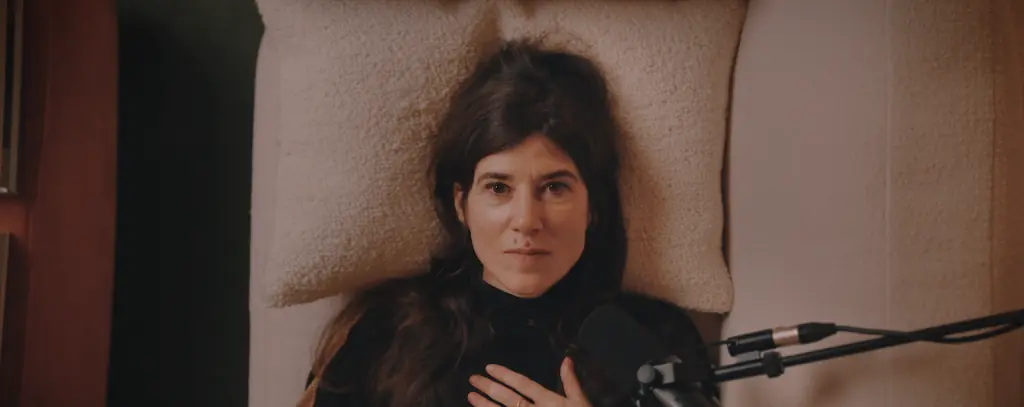
- •Guests record lying on a couch in Freud's own home, filmed from above — a literal psychoanalytic posture that Freud attributes in part to her family history as a great-granddaughter of Sigmund Freud
- •Anderson preceded his Fall/Winter 2026 show with a conversation with Freud broadcast to Dior's 47 million Instagram followers — a signal of how seriously the industry takes her capacity to draw out its key figures
- •Freud's label, launched in 1990 and known for slogan sweaters including 'Ginsberg Is God,' operates on the same storytelling logic as the podcast: clothing as a vehicle for things that are hard to say directly
Bella Freud did not set out to make a podcast that would make some of fashion's most guarded figures cry. She started Fashion Neurosis in 2024 with a single opening question — 'Can you tell me what you're wearing and why you chose those particular clothes?' — because she thought it would be relaxing. It was not relaxing. Jonathan Anderson, the creative director of Dior, talked about things he had not talked about before. Rick Owens went into his past with his authoritarian father. Richard E. Grant described being shot at by his. Julianne Moore disclosed things that belong in a therapy session. Less than a year after Freud asked that first question, Vox Media's podcast network — one of the top 10 in the US — picked up the show.
The explanation for how a single question about getting dressed produces this kind of result is something Freud has been working out in real time. She is sitting in her London store — a warm room with velvet sofas, cushions printed with '1970,' an animal-print rug, and the general feeling of someone's home that happens to sell clothes — and she is not entirely sure the formula is as simple as the question makes it sound. The question works because clothing is not a neutral topic. It is a daily decision that most people make without fully examining. Being asked to examine it, in front of a microphone, lying on a couch, tends to open doors that PR training does not know to keep closed.
The show has become one of the more significant cultural products fashion has generated in recent years — not because it covers fashion news, but because it uses fashion as a way into something more personal. The Vox Media pickup confirmed what the early episodes had already demonstrated: there is a large audience for the version of fashion conversation that goes somewhere real, and Bella Freud is currently the only person conducting it.
The Question That Opens Everything
The question is deceptively simple. Can you tell me what you're wearing and why you chose those particular clothes? It is the kind of question that sounds like small talk and is not. Getting dressed is something people do every morning without much conscious thought, and being asked to account for it — on the record, in detail, in someone's living room while lying on a couch — surfaces things that a direct question about personal history would not.
Freud describes the effect as consistent rather than accidental. People do not come to Fashion Neurosis expecting to talk about their fathers. They come expecting to talk about what they are wearing. The gap between those two things is where the conversation actually lives. By the time a guest has explained why they chose a specific jacket or a particular pair of shoes, they are already partway into a personal history without having been asked for one directly.
The physical setup reinforces the dynamic. Guests lie on a couch in Freud's home and are filmed from above — a deliberate echo of the psychoanalytic posture, which Freud says produces a specific kind of talk. Esther Perel, one of the world's most recognized relationship and therapy practitioners, agreed to take part and told Freud afterward that she had never done psychoanalysis lying down and noticed it felt like talking to herself. That is a meaningful observation from someone whose professional life has been spent understanding what different conversational formats produce.
Anderson preceded his Fall/Winter 2026 Dior show with a Fashion Neurosis conversation, broadcast to the brand's 47 million Instagram followers. The decision to use Freud's format — and specifically Freud — as the vehicle for that broadcast was not arbitrary. It reflected an industry understanding of what she can get out of a conversation that a standard press format cannot.
Freud is aware of the accidental power of the setup. She started the podcast because she thought the opening question would be relaxing. It is not relaxing, she says, laughing. Even for her. Even having asked the question hundreds of times. The examination of why you got dressed the way you did has a way of arriving somewhere uncomfortable regardless of who is asking.
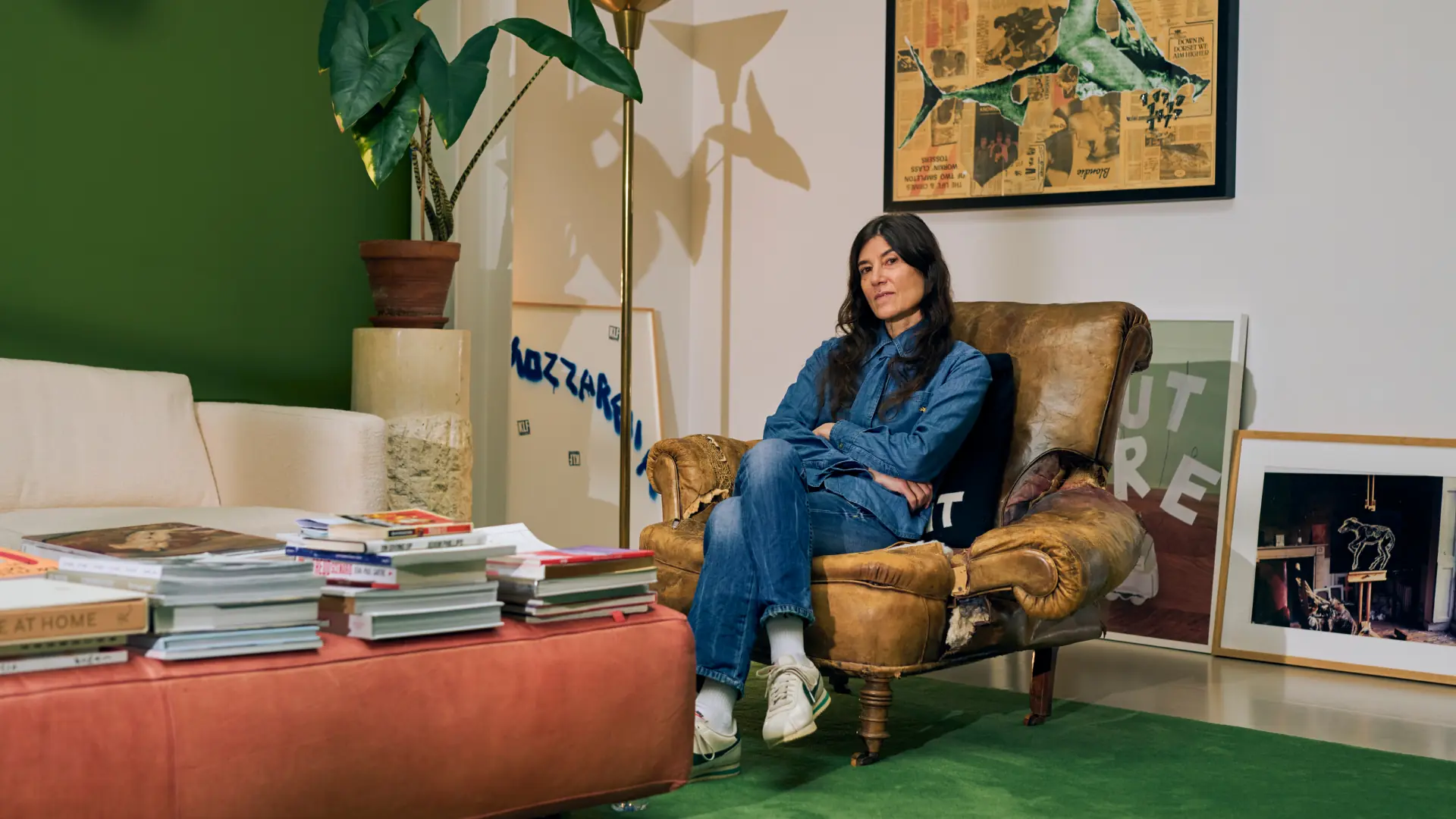
Guests on Fashion Neurosis are invited to lie on a couch in Freud's own home and filmed from above — a setup that Esther Perel described as feeling like talking to yourself.
The Label — Storytelling Since 1990
“You can wear something when you don't have the language to express it. Sometimes it's so intense that you can't speak. But you can find something to wear that distills feeling into one word or symbol.”
Freud launched her label in 1990. The cult-favorite pieces that made her name — sweaters declaring 'Ginsberg Is God,' the provocateur slogan reads, the '1970' motif that appears throughout her store — operate on the same storytelling logic as the podcast. The clothes carry references, histories, and communities. They say things that the wearer might not be able to say in conversation. That function is not incidental to the design. It is the design.
The relationship between the label and the podcast is direct: both treat clothing as a medium for communication rather than as protection or decoration. Freud is explicit in rejecting the armor metaphor — the idea that clothes are a defense mechanism, something you wear to project an image and keep the world at a distance. She wants clothes to be a conversation starter. She wants the podcast to use clothes as a way into actual conversation. The same principle runs through both.
What Freud Thinks Clothing Actually Does
WHY IT MATTERS
Freud's framework for what clothes do is more specific than the standard versions of this conversation. She is not arguing that fashion is art, or that personal style is identity, or that what you wear communicates who you are. She is arguing something more practical: that good clothes create the conditions for openness. They protect you enough that you feel safe being vulnerable. They signal something about you that starts a conversation. They give you a way to say something when you do not have the words.
The anti-armor position is the most distinctive element of her framework. The armor metaphor — the idea that clothes are a way to present a version of yourself that keeps the real version protected — is extremely common in fashion conversation. Freud's argument is that the best clothes do the opposite: they make you accessible rather than defended. The protection they offer is not a wall but a permission structure — you feel held enough to be open. The Fashion Neurosis couch is the same thing at a larger scale.
Why the Best Stories Start With Why, Not Who
The standard fashion interview question is who are you wearing. The implicit assumption is that the label is the story — that naming the designer names the meaning of the outfit. Freud's work, across both the label and the podcast, is a sustained argument against that assumption. The who is a fact. The why is a story. The why is where the person actually is.
In Freud's world, as the interview closes, this distinction runs through everything. John Galliano and Pieter Mulier are the designers she identifies as fashion's greatest storytellers working today — people whose work has a narrative, a point of view, a reason for existing beyond the garment itself. Rosalía, for the role of clothing in her visual world, belongs to the same category. What connects all of them, and what connects the label to the podcast to the conversation in the London store, is that the clothes are never just clothes. They are always the beginning of something.
Frequently Asked Questions

Claire Whitmore has spent more than a decade tracking the pulse of global fashion, from the ateliers of Paris to the showrooms of New York. She covers emerging designers, heritage houses, and the business forces quietly reshaping what luxury means today.