KEY TAKEAWAYS
- •AI-generated hair inspiration images are flooding search engines and social media, produced primarily by hair extension companies and wig vendors seeking engagement
- •Celebrity hairstylist Mark Townsend says clients are now routinely bringing AI photos to his salon — worse than the Instagram filter era because AI hair does not obey the laws of physics or biology
- •At least half of the brides seen annually by Gloss Beauty + Bridal, a Northeast-based salon group, now arrive with AI-generated images as their hair inspiration
- •AI image generators show consistent bias toward specific hair textures, with Type 4 coily hair regularly rendered as a curl — reinforcing existing media bias against natural Black hair
- •No federal labeling requirement currently exists for AI-generated images in commercial contexts; New York has enacted legislation regulating 'synthetic performers' in advertising, while federal legislation has stalled
Imagine bringing a photo to your hairstylist of exactly the look you want: copper balayage, soft waves, perfect volume, a model posed in a gleaming salon with rows of mirrors behind her. The image is beautiful. The hair is extraordinary. The face is lineless and symmetrical. Your stylist looks at it carefully and then tells you something that has not been said in a consultation before: this is not a photograph. Nobody in this image has ever had a haircut. The person in the picture does not exist, the hair was generated by an algorithm, and the specific version of the copper balayage you are pointing at may not obey the laws of physics as they apply to actual human hair. Welcome to the AI hair inspo era.
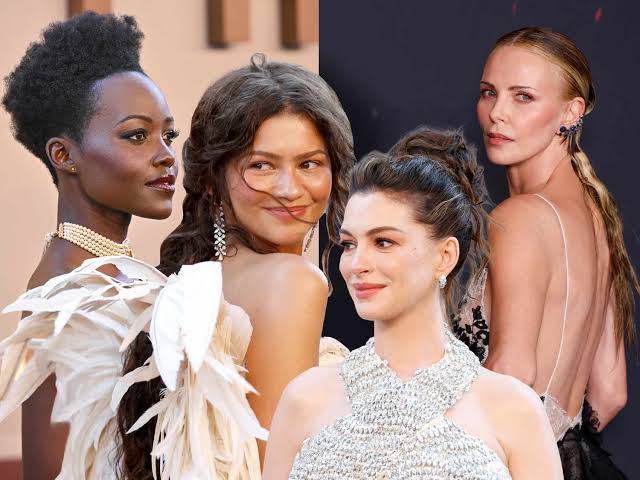
The images are everywhere and they got there fast. Hair extension companies and wig vendors — small beauty businesses looking to generate engagement rather than document real results — have been producing and posting AI-generated hair imagery at scale. The images perform well algorithmically. They are visually consistent, perfectly symmetrical, and free of the imperfections that characterize real photographs of real hair. They surface readily in search results. They appear on Pinterest boards, in Google image searches, across every platform where someone might be looking for hair inspiration before a salon appointment.
By early 2026, the situation had reached a point that prompted Axios to report on it as a formal industry concern: at least half of the 40 to 50 brides seen each year by Gloss Beauty + Bridal, a Northeast-based salon group, were arriving with AI-generated images as their hair inspiration. Celebrity hair extension specialist and TV personality Angelina Murphy told the outlet that her consultations now routinely begin with the same declaration: 'This is not real. The roots aren't real. The color isn't real. Her bone structure isn't real. The end result will never, ever look like this.'
The Problem Landing in Every Salon Chair
Mark Townsend has trimmed Dakota Johnson's bangs. He has worked on Mary-Kate and Ashley Olsen. He has been cutting and styling A-list hair for long enough to have had every version of the photo conversation a celebrity hairstylist can have with a client. He knows what it means when someone brings in a picture of Gisele Bündchen and asks for her hair. He can explain the six pounds of extensions, the wind machines, the lighting. He has worked on enough of those shoots to describe exactly what produced the image and why the result on the street will look different.
He cannot do that with AI photos. He does not know where they came from. He does not know what source images trained the model that produced them. He cannot point to a specific editorial or campaign and explain the technical artifice behind it. What he can say — and is now saying regularly, in a version of a conversation that he describes as having taken a surreal turn — is that the hair in the image is not real hair, it does not move the way real hair moves, and nobody has that much hair on their head.
The conversation that used to take thirty seconds now takes considerably longer. Townsend told InStyle that the shift from Instagram-filter-era standards to AI-era standards has been significant: the filter could at least be identified as a filter. An AI-generated photograph of a model in a salon, with rows of mirrors behind her and a gleaming smile, requires more explanation before a client accepts that what they are looking at is not a photograph of a real person.
The problem is self-reinforcing. The images perform well in search because they are visually consistent and algorithmically friendly. The more they perform, the more they are produced. The more they are produced, the more they displace real photographs in search results. A client searching for hair inspiration today is increasingly likely to encounter AI-generated images before real ones — without any visual indication that what they are looking at was not taken by a camera.
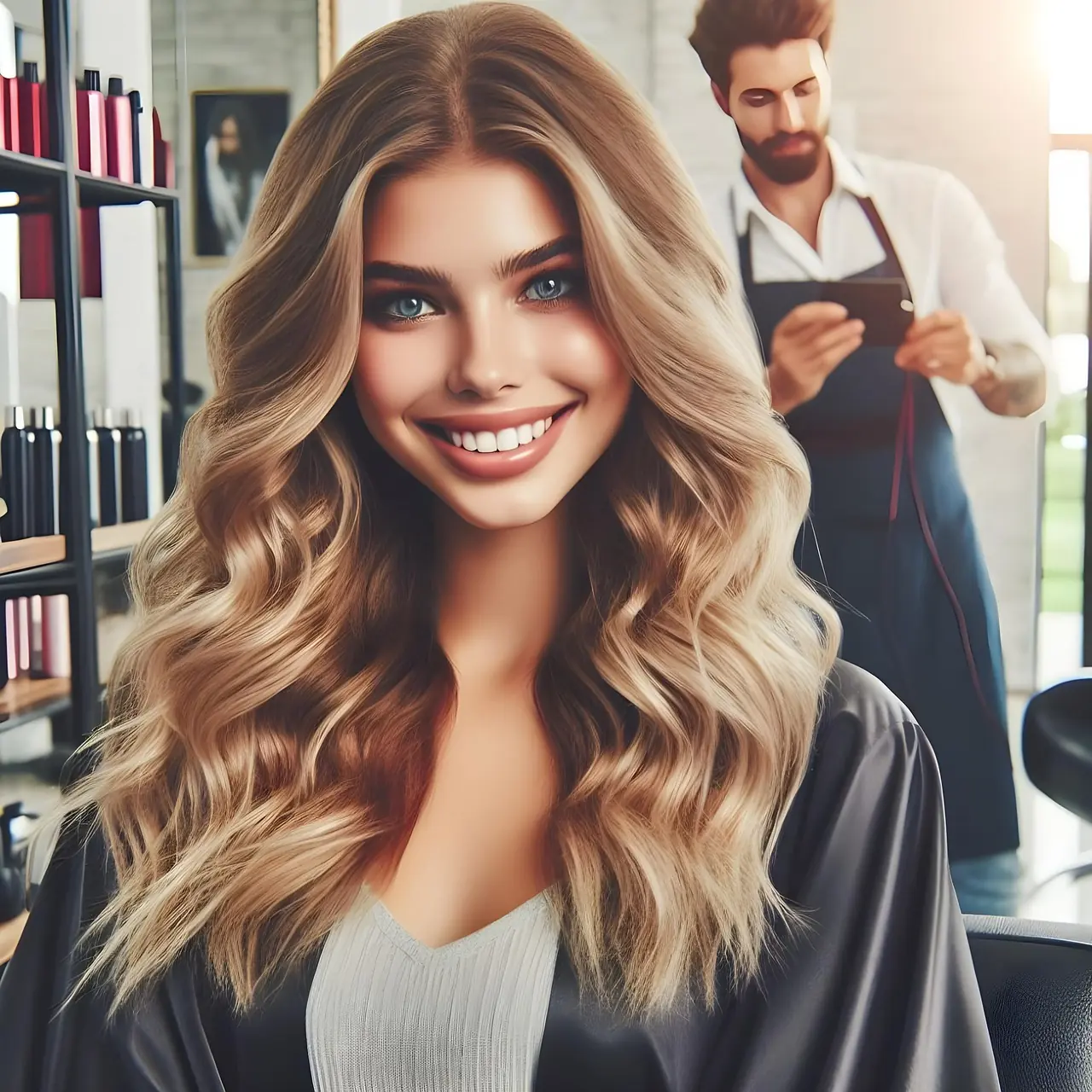
The consultation room has become the place where AI fantasy meets physical reality — stylists are now routinely spending the first portion of appointments explaining what is and is not possible before any actual hair conversation can begin.
The Specific Harm to Black Women and Textured Hair
“Type 4 hair is not a curl, it's a coil. But AI tends to replace even zig-zag patterns with curls. It reinforces what our media reinforces — this expectation of what people used to call 'good hair.' That puts Black women at a severe disadvantage in how they feel about themselves now, naturally, as they are. And that's always been there, and I don't think AI is helping that situation.”
The AI hair imagery problem lands differently on different clients, and its most damaging effects are concentrated among Black women with Type 4 hair. Gadar is specific about why: the coily, zig-zag pattern that characterizes Type 4 hair is not what AI generators produce when asked for natural Black hair. They produce curls. The distinction matters — a coil and a curl are structurally different things, and rendering a coil as a curl in an aspirational hair image is not a neutral error. It is the replication of a beauty standard that has historically treated curly and wavy hair as more acceptable than coily hair.
Dove's Real Beauty Prompt Playbook, a 72-page guide released in 2025 for creators using AI image generation tools, documented the extent of the bias: when asked to generate an image of a beautiful woman without any other qualifiers, AI generators produced blonde hair 37 percent of the time — despite blonde hair characterizing only approximately 4 percent of the US female population. The pattern extends to hair texture, skin tone, and body type. Beauty, as AI currently defines it, is a narrow set of parameters that the algorithm has extracted from existing media, which was already biased before the algorithm got to it.
The Legal and Disclosure Landscape in 2026
WHY IT MATTERS
No federal requirement currently exists mandating that AI-generated images be labeled as such in commercial contexts. Representative Anna G. Eshoo of California introduced the Protecting Consumers from Deceptive AI Act in March 2024, but the bill has not advanced. The 'One Big Beautiful Bill' signed by President Trump did not include a provision that would have blocked states from creating their own AI rules — which means state-level action remains possible, and some states have moved.
New York enacted legislation amending General Business Law to regulate 'synthetic performers' in advertising — defined as digitally created assets used in commercial content. The law applies to persons and entities producing advertising content and requires disclosure when a synthetic performer appears. It does not cover all AI-generated imagery, but it represents the most substantive domestic disclosure requirement to date for AI content in a commercial context. Meanwhile, UK media regulator Ofcom opened a formal investigation into AI platforms capable of generating explicit imagery, and regulators in three countries moved against such platforms in a single week in early 2026 — suggesting international momentum toward disclosure requirements that US federal law has not yet matched.
What Stylists Actually Want You to Bring
The three stylists interviewed for this article agreed on one thing: a real photograph of yourself when you liked your hair best is more useful than any AI-generated image of someone else's imagined hair. Townsend's instruction is specific — bring a photo from when you were happiest with your hair, even if it is ten years old. Gadar's preference runs in the opposite direction: she finds 'don't likes' more useful than 'do likes,' and both more useful than a specific photo the client wants replicated exactly.
Salcedo's advice is the most expansive of the three. He recommends looking beyond hair photography entirely — to fashion, to color palettes, to objects and environments that reflect how someone wants to feel — and using those as the starting point for a conversation with a stylist. 'Look within and ask yourself, what and how do I really want to express myself,' he said. 'Don't let an algorithm or app determine that for you.' The algorithm does not have to sit with the result. The client does.
Frequently Asked Questions
Natalie Avery covers the full spectrum of modern beauty — from lab-backed skincare breakthroughs to the cultural conversations driving clean and conscious wellness. Her writing brings both scientific grounding and genuine enthusiasm to every story she tells.